
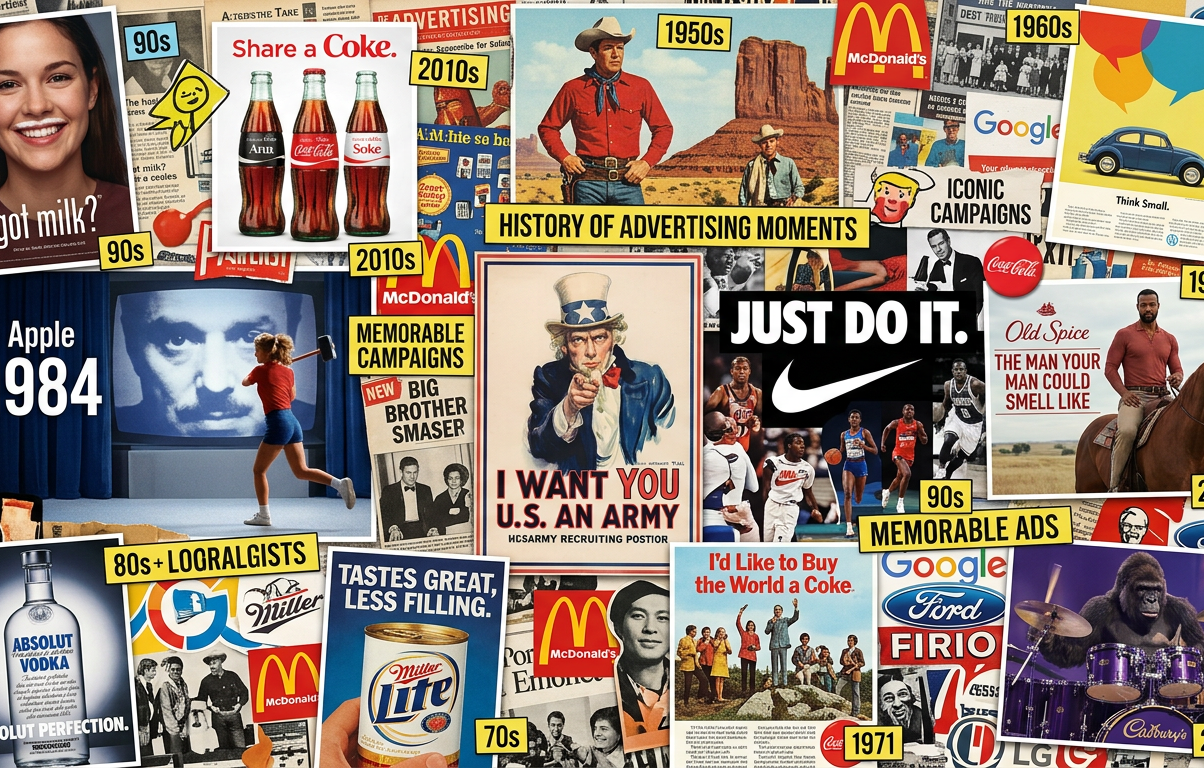
Advertising is still big business in America. Total U.S. advertising revenues have surpassed $300 billion annually in recent years, placing the industry alongside transportation and health care, and ahead of banking, food, and chemicals. A significant portion of those dollars flows through advertising agencies and marketing communications firms working on behalf of clients.
There are approximately 75,000 advertising agencies in the United States, give or take assorted design studios and interactive firms. They tend to be smaller rather than larger organizations. Some specialize in a particular type of advertising or industry. Most handle a wide variety of accounts, from retailers to real estate, from manufacturers to morticians. While some are located in major metropolitan areas, research consistently shows that the majority of advertising agencies operate in smaller cities and towns.
Small organizations in places like Toledo do business with local manufacturers and retailers. This does not sound like the advertising agency business of legend: The Man in The Gray Flannel Suit, David Ogilvy, J. Walter Thompson, long lunches, first-class travel, and all of the Mad Men trappings. The explanation for this public perception lies in the fact that we believe what we are told. The media has popularized a vision of advertising agencies as places where large national clients spend millions of dollars having beautiful thirty-second films made and placed on the most-watched shows in the country so everyone can see the commercial and run out to buy the product.
The truth is that a majority of advertising dollars in this country are spent by small businesses. Small businesses are the heart and soul of advertising revenues. They generate the need for ads, logos, websites, social content, sales materials, and countless other projects year after year. The big agencies have the glamour. Each does hundreds of millions of dollars in billings annually, almost all with larger corporate advertisers. There are fewer than 100 of them in the nation. The smaller agencies have the volume.
Ad Agency Evolution
Advertising is a strange business. Acting as an agent for people who want to place advertising in media. Creating the ad itself and then analyzing the results. How did we get here? This is not a basic industry. It is not manufacturing or anything strictly necessary for survival. Advertising is something the world could survive without, could it not?
Probably not. In the post-industrial era, the world cannot survive without information. Advertising is the dispersal of information in its most efficient commercial form. Information is necessary for a society to function. In feudal times it was called a decree or proclamation. Totalitarian societies called it propaganda. In America, as usual, it is done with a slant toward the free market. Advertising fulfills the need to sell something. America was built on that premise.
Advertising of one sort or another has been around since the beginning of time. The serpent advertised some good eats to Eve back in the Garden. Advertising was essentially another way of spreading information until the 19th century, when advertising agencies came into being. The agency business began in the mid-1800s. Way back then, agencies did not even prepare ads. Their sole function was to place advertising.
The advertising agency of the 1870s conducted its affairs from a one-room office. A prospective customer climbed a flight of stairs, opened the office door, and found himself in the agency, right in the middle of it, with no railing or counter to detain him. In one corner sat the boss, whose name the firm generally bore. In another corner at a slant-top desk sat the estimate man with his heavy scrapbooks, quoting rates and expenses. A bookkeeper stood by his upright station, with the copying press and office safe close at hand. A check-writing clerk and office boy tended to miscellaneous tasks. No telephone or typewriters intruded on the sounds of scratching pens and riffling papers. At the rear of the office, separated by a low partition, were rows of cubbyholes filled with periodicals, like a public library.
There were no copywriters, art directors, account executives, or marketing experts. None of these mainstays of 20th century advertising had yet been invented. The sole purpose of an advertising agency was to place advertising. When the first advertising agent, Volney Palmer, opened his Philadelphia shop in 1843, he effectively worked for the newspapers he represented: soliciting orders for advertising, sending along but not preparing copy, and collecting payment for the media. His successors later acted as independent space brokers, taking their pay as a commission from fees paid to publishers.
For most publishers, advertising agents were a tolerated nuisance. Many better magazines of the day carried no advertising at all. Advertising was considered an embarrassment. A firm risked its credit rating by advertising. Banks might take it as a confession of financial weakness. Everyone deplored advertising. No one took credit for it. It was used mostly by patent medicine manufacturers and land speculation companies. The entire business was conducted in a half-light of bunkum and veiled appearances.
Respectability and Service
It took years for the business to make itself respectable. Eventually, through the efforts of such advertising notables as J. Walter Thompson, who brought scrupulous honesty to his agency dealings, and Cyrus H. K. Curtis, who effectively invented the modern magazine, the business gained stature. Coupled with fast-growing national markets that demanded consumer products, manufacturers were forced to use advertising to spread the word.
Into this environment came Albert Lasker, the man most responsible for evolving the advertising agency into something close to its present form. Lasker, who owned Lord and Thomas, the first great agency of the 20th century, recognized the importance of the creative process in advertising a product. Instead of trusting advertisement creation to the client or to the composing room foreman of the newspaper, he hired copywriters and later artists to create a look and style for ads that would make them stand out. With this pioneering philosophy of creativity in place, Lasker expanded the role of the account executive to mediate between the business realism of the client and the creative staff. His contributions permanently shaped the dynamics of agency work: client on one side, creatives on the other, account executives in between.
Advertising, almost overnight, became respectable, even believable, and certainly enjoyable. For his innovations, Lasker was well rewarded. He reportedly made $3 million dollars a year at the height of the Great Depression.
The story continues through the great radio shows and jingles of the 1930s and early 1940s, the post-war boom of the late 1940s, 1950s, and 1960s when David Ogilvy, Bill Bernbach, Rosser Reeves, and others made their mark and network television became king.
A Whole New Ballgame
Advertising was a different business then. Bold, young advertising creators had the opportunity to work directly with company leaders to create memorable images for products. Today, in most larger companies, advertising is a more technocratic process, driven by marketing analysis and committee approval. By the time an ad moves out of review, it has often been watered down sufficiently to render it forgettable. The bold creators rarely reach the real decision makers.
This is a shame, because on today's crowded channels, only exceptional creative work stands out.
The industry has been reshaped again, more dramatically and more quickly than at any previous point in its history. Digital media fragmented the audience. Social platforms changed the relationship between brands and consumers. Programmatic buying transformed how media is purchased. Now AI is reshaping what agencies produce, how they produce it, and what clients believe they need an agency for at all.
What will happen to advertising? Will it cease to exist as we know it today?
Advertising still serves a vital function. It informs and it motivates. Even with its puffery and occasional half-truths, advertising remains the most efficient form of commercial information in a free-market world. The tools will keep changing. The function will not. As long as there are products to sell and audiences to reach, there will be a need for people who know how to connect the two with clarity, creativity, and craft.
A powerful message delivered to a waiting world. That has always been the job. It still is.


