
There is a certain kind of creative director who refuses to bring any discipline to the process. Ask how an idea came together and the answer is always some version of "it all comes from here," a hand on the gut. "This is visceral, not intellectual. You let it well up inside you, then you spit it out."
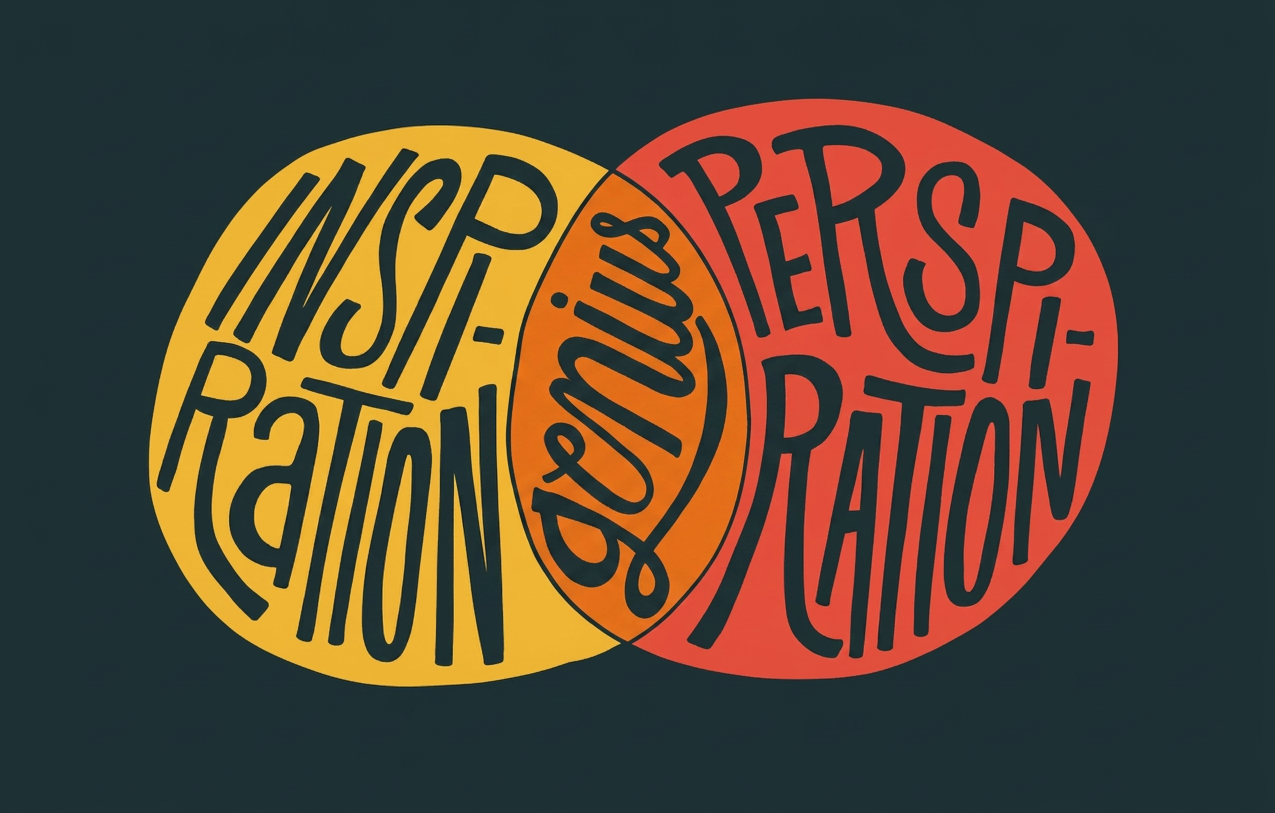
That is one theory of creative work. It is not the one that holds up. The best, most consistently effective creative comes from a disciplined process: laying down a structure and following a path. Great creative in an agency is far more perspiration than inspiration.
Here is what building that discipline actually requires.
Hire Well
David Ogilvy had a habit of sending matryoshka dolls, the wooden Russian nesting dolls that get progressively smaller as they stack inside one another, to every new manager at his agency. Accompanying the doll was a personal note: if these managers hired people less talented than themselves, Ogilvy and Mather would eventually become a company of dwarfs. If they hired people better than themselves, the agency would become a company of giants. Well put, from a man widely regarded as one of the founding fathers of modern advertising, whose approach to hiring built one of the most enduring agencies of the twentieth century.
Building a genuinely creative agency requires hiring people with real talent: artistic, strategic, planning, and presentation talent. Too many agency principals treat hiring as filling a seat rather than the single most consequential decision they make. One Second Wind member's interview process illustrated the problem perfectly. The principal did nearly all the talking throughout the interview. Afterward she remarked, "I really liked that guy. He thinks just like me. I'm going to hire him." What had actually happened was the candidate nodded at the right moments and said very little.
Robert Half, the well-known employment consultant, has long noted that smaller business owners often skip the hiring discipline that larger companies take for granted, and it costs them in the long run. Proper interviewing, testing, and reference checking are not optional steps. Hire the wrong person and it typically takes six months and considerable pain to correct the mistake and get the agency back to normal. That disruption does not enable anyone to do better creative work.
Two things matter most. First, look for people who will blend with the current team while bringing something new to it, a different skill, a different experience, a different way of seeing a problem. They should be sharp, personable, and genuinely willing to work hard for the team, not just for themselves. Consider chemistry as carefully as competence. The goal is someone who meshes with the team, not someone who becomes friction in the gears.
Second, look for a genuine sense of humor, particularly the fast, associative, pun-heavy kind. The best punsters tend to be prolific idea generators. Whether it is something in how their minds work or just an alternate way of seeing the world, that kind of quick, irreverent thinking tends to be exactly what produces great creative concepts, and it tends to be contagious across a team.
Build the System That Makes Discipline Possible
Creative discipline does not happen by accident. It requires two things most agencies underinvest in.
The first is a genuinely strong input and creative brief process. Too many agencies treat the brief as a formality rather than the foundation the entire creative process depends on. The most consistently creative agencies, regardless of size, take the intake process as seriously as the work itself.
The second is organized traffic. Creative people cannot do their best work if they are constantly interrupted by shifting schedules or, worse, no real scheduling discipline at all. The most creative agencies manage every job, every day, step by step, with clear sign-offs and regular updates when timing changes. Structure is not the enemy of creativity. It is what protects the time creativity actually requires.
Brand the Agency Itself
The best agencies invest real time and effort into describing what makes them different in a way competitors cannot easily copy. That positioning, sometimes overlooked as an internal exercise, plays directly into creative success with clients, prospects, and employees alike. An agency that cannot articulate what makes its own thinking distinctive will struggle to convince a client its creative recommendations are worth trusting.
Solve the Boring Problem That Kills Creative Momentum
This part is unglamorous, but it matters. A creative agency needs to be able to find its own files and images quickly. This is easy to overlook as a principal, since it rarely shows up as a visible problem, but it quietly drains creative energy every time it fails.
One West Coast agency had done strong work for several clients but had such a poor system for retrieving past images and assets that the quality of new work suffered. Every time a project required pulling files from previous work, the team lost hours to the search, and with those hours went the creative momentum built up during the input meeting.
A cloud-based digital asset management system, or a well-organized server-based equivalent, solves this directly. The specific platform matters less than having a real system that tags, files, and retrieves assets instantly rather than by memory and guesswork.
Perspiration Comes First
Building a great creative agency is mostly hard work and close attention to detail: hiring carefully, building real systems, brief discipline, organized traffic, clear positioning, and the unglamorous infrastructure that keeps creative momentum from leaking away. There will be genuine flashes of inspiration along the way. They are rare, and they tend to show up only after the discipline is already in place. Build the perspiration first. The inspiration follows.


