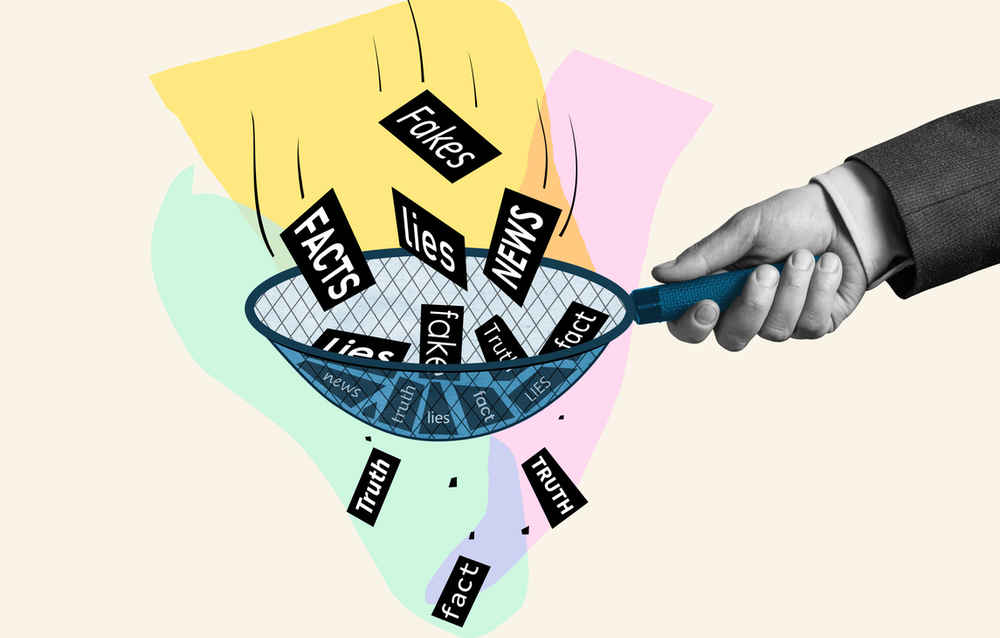
Agencies have always had to fight for attention. Now they have to fight for belief. Too many channels, too much noise, and a level of consumer skepticism that did not exist a decade ago have made trust the scarcest resource in marketing. The spread of false information is making it scarcer by the day.
A Polluted Information Environment
The sources of false information are multiplying. Fake reviews. AI-generated testimonials. Influencer personas that do not exist. Misleading competitive claims. Fabricated industry data. Agencies are contending with all of it simultaneously, and the volume is only part of the problem.
The speed is the other part. Social media disseminates false information faster than any correction can travel. By the time the truth catches up, the damage is done. Consumer skepticism has reached the point where even legitimate campaigns are met with doubt. It only takes one "fake news" comment to derail everything you have built for a client. That is not a hypothetical. It is Tuesday.
What It Is Doing to Your Work
Fake traffic pollutes analytics. Click fraud makes performance measurement unreliable. Distinguishing real audiences from artificially inflated ones is becoming a skill set in its own right. Messaging gets clipped, recontextualized, and weaponized against the very client it was created for. Through all of this, clients are pressing agencies for credible, provable results while the baselines used to demonstrate those results are increasingly compromised.
It is a difficult position. Complaining about it will not help. Adapting to it will.
The Threat Is Getting Harder to See
Deepfakes and synthetic media are moving into mainstream advertising. AI-generated content is quietly eroding what authentic marketing looks like anymore. Platform algorithms are shifting in response to misinformation, often with little warning, leaving agencies scrambling to catch up to rules that changed overnight. The ground is not going to stop moving. Build accordingly.
What to Do About It
Start with third-party verification for data, influencer audiences, and campaign performance. If you cannot verify it, do not use it and do not present it to a client as fact.
Use transparency as a brand strategy. Credibility that is earned through consistent, honest communication is the one thing competitors cannot fake. That is a genuine competitive advantage and agencies should be selling it as one.
Invest in owned media. Renting attention on platforms that can change their algorithms, their policies, or their business model overnight is a structural vulnerability. Clients who own their audience relationships are in a fundamentally stronger position than those who do not.
Above everything else, treat information integrity as a core competency, not a compliance checkbox. Agencies that build this into how they work, not just what they say, will be the ones clients trust when everything else feels unreliable. That trust will not be built quickly. It is the only currency in this environment that actually holds its value.


